

Modular display systems like TRIGA® offer practical solutions for trade show exhibitors by addressing key challenges such as cost, setup time, and flexibility. These systems are designed to save money, simplify logistics, and create visually impactful booths. Here are the top benefits:
- Flexible Sizing: Adjust booth configurations to fit different spaces (e.g., 10×10, 10×20, 20×20) using the same components.
- Cost Efficiency: Lower long-term costs by reusing frames and updating graphics instead of rebuilding booths.
- Tool-Free Setup: Snap-together components make assembly quick and eliminate the need for professional labor.
- Lightweight & Portable: Aluminum frames and fabric graphics reduce shipping and storage costs.
- Custom Branding: Easily swap graphics to refresh designs for different events.
- Scalability: Expand or reduce booth size as your business grows.
- Space-Saving Design: Slim frames maximize booth space for demos and interactions.
- Eco-Friendly Materials: Recyclable aluminum and reusable fabric graphics reduce waste.
- Durability: Built to withstand repeated use, lasting over a decade with minimal maintenance.
- Strong Visual Impact: Tension fabric ensures smooth, vibrant graphics, with options for LED backlighting.
Key takeaway: Modular systems like TRIGA® simplify trade show logistics, reduce costs, and provide professional-looking displays that adapt to your needs over time.
1. Flexibility for Any Booth Size
Trade show venues come in all shapes and sizes, so having a display that can adjust to different booth dimensions is a game-changer. Modular systems, built with standardized components, let you transform a 10×20 inline display into a smaller 10×10 booth simply by removing specific panels.
"Instead of purchasing, storing, and shipping multiple-sized booths to fit each different exhibit space, you simply need one modular trade show display that you can adjust to fit each exhibit space." – ExpoMarketing
TRIGA® Displays make this process even easier with tool-free components. For example, you can split a 20-foot backwall into two 10-foot displays for smaller events or expand it into an island setup by adding extra panels. Some systems even feature a "3-in-1" design, allowing you to switch between 10×10, 10×20, and 20×20 configurations using the same core parts.
To maintain a cohesive brand presence, design your graphics for the smallest booth size you anticipate. This ensures your branding stays consistent, no matter how many panels you use. Additionally, standardized slots in the frame let you reposition lighting, shelving, and monitor mounts to fit any layout – no extra accessories required.
With one modular system, you can cover everything from a compact 10×10 display to an expansive 20×40 island exhibit, saving you from the hassle and expense of managing multiple booth setups.
sbb-itb-bcf2cad
2. Cost Savings Over Time
Investing in a modular display system comes with a hefty upfront cost, but the long-term savings make it worthwhile. These systems help cut down expenses related to labor, shipping, and storage over time. For comparison, traditional custom-built booths often start at $10,000 and can climb past $30,000 per build. With a modular setup, you pay once and reuse the same components for years, effectively spreading the cost across multiple trade shows.
"While there’s an initial investment, this is quickly amortized across multiple events. You eliminate the recurring expenses of designing and fabricating entirely new custom stands for every show, significantly lowering your overall marketing budget." – IGE Group
The system’s tool-free assembly helps you avoid the high cost of hiring professional labor. Plus, its lightweight materials can cut freight and drayage fees by 25%–50%.
You can also refresh your booth’s look without a complete overhaul – just update the fabric graphics on the existing frame. Compact storage further reduces costs, keeping your budget in check.
3. Tool-Free Assembly
TRIGA® systems feature a clever snap-and-slot mechanism that connects interlocking feet, uprights, crossbars, and graphic rails seamlessly. No screws, bolts, or specialized tools are needed, which means you can set up your booth without hiring expensive professional labor crews. This approach directly lowers your setup costs.
Most TRIGA® Go displays can be assembled in less than 30 minutes. For example, a standard 10×8′ back wall can be set up by just one person, while larger configurations typically need two people. The patented self-tensioning device on the crossbars takes care of wrinkles with a simple press. No need for manual steaming or dealing with complicated mounting processes. This design not only speeds up assembly but also makes it easy to reconfigure your booth when needed.
"The TRIGA Display is one of the easiest and fastest systems to set up. Save time and money by not relying on show site labor for the installation." – Production Prints
Another advantage is how quickly you can update your graphics. By releasing the tensioner, fabric graphics can be swapped out in seconds, letting you refresh your branding between events. Plus, the system’s flexibility allows you to transform a flat wall into an L-shape or U-shape configuration – all without requiring tools. This smart, tool-free design simplifies trade show preparations while keeping costs under control.
| Feature | TRIGA® Systems | Traditional Booths |
|---|---|---|
| Tools Required | None | Screws, bolts, wrenches |
| Labor Source | 1–2 exhibitors | Professional crews |
| Setup Time | Under 30 minutes | Hours or days |
| Graphic Installation | Self-tensioning (instant) | Manual stretching/steaming |
4. Lightweight and Portable
TRIGA® systems are designed with aluminum frames and tension fabric graphics, ditching the bulk of wood or steel structures. This smart choice slashes booth weight, which means lower shipping costs. For instance, a 16-foot modular tower can collapse neatly into a single portable carry bag, making it easy to transport without the need for specialized equipment.
Because of their compact design, these displays are easy to ship through standard carriers like UPS or FedEx. You can even check them as airline baggage, avoiding the hefty fees that come with traditional freight services. Plus, since the components are lighter, you’ll save big on drayage fees – the cost of moving materials from the loading dock to your booth space.
"Lightweight materials like aluminum and fabric reduce shipping and drayage costs." – Ari Samaha, Featherlite
The portability doesn’t stop at shipping. Many TRIGA® displays are small enough to fit in a standard passenger vehicle. This means for local or regional events, you can skip freight services altogether and simply load the booth into your car. Between events, the collapsible components take up minimal storage space – often just a corner of your office – saving you from paying for warehouse storage.
Fabric graphics also fold down into compact sizes, unlike rigid boards that take up significant space. This not only reduces the physical volume but also cuts dimensional shipping costs. The wheeled cases used for TRIGA® components make it easy for one person to move an entire display through airports or convention centers without any help. This level of portability underscores TRIGA® Displays’ focus on convenience and practicality for exhibitors.
5. Custom Branding Options
TRIGA® systems offer a unique way to personalize your trade show booth with interchangeable fabric skins. These skins can feature your logo, product visuals, taglines, or other key brand graphics – all while maintaining a polished, wrinkle-free appearance.
"The modular display’s message is primarily communicated through the ‘skin’ that overlays the frame of the display. You can design your skin to feature your logo, images, taglines or other graphics." – GES Marketing
The system’s flexibility and ease of assembly make it simple to create striking visuals. For instance, you can design seamless, large-format graphics that span across multiple frames – like combining two 10-foot frames to display a single, continuous 20-foot-wide image. For added impact, consider Silicone Edge Graphics (SEG) with LED backlighting. These create high-contrast, illuminated displays that draw attention from across the room. Additionally, you can incorporate textures such as wood or stone or use lifestyle imagery to convey a specific mood, whether it’s professional, serene, or cutting-edge.
TRIGA® also allows you to refine your booth’s look with hardware finishes. Options like Milkplex white or acrylic black counter tops can complement your brand’s color scheme. The patented tensioning system ensures the fabric stays taut and professional-looking.
When it’s time for a refresh – whether for a new campaign or a different audience – you can simply replace the fabric graphics while reusing the same frame structure. This interchangeable system lets you adapt your booth for various trade shows without needing to invest in entirely new hardware. Combining customization, flexibility, and modular design, TRIGA® Displays offer a smart solution for creating a standout presence at any event.
6. Scalability for Growing Needs
As your business grows, your trade show booth can grow right along with it. TRIGA® modular systems are designed to start small and expand as your exhibition requirements increase.
Thanks to their modular design, these systems adapt seamlessly to changing needs. For instance, you can begin with a simple 10×10 display and later expand by attaching additional 10-foot frames. This allows you to create larger or more intricate layouts like L-shapes, U-shapes, or even island configurations. Unlike traditional static displays, TRIGA® systems make it possible to scale up your booth without having to purchase an entirely new structure.
"A modular booth is a trade show exhibit built from interchangeable sections or panels that can be reconfigured to fit different floor plans and design needs." – Ari Samaha, Featherlite
TRIGA® towers offer the same flexibility, scaling from 6 to 16 feet using the same core components. You can also enhance your booth with functional add-ons like shelving, TV mounts, LED video walls, or interactive touchscreens – all without needing to replace the original framework. Plus, these upgrades can be handled quickly by your own team, eliminating the need for extra on-site labor.
Initial TRIGA® kits range from about $6,100 to $14,200, depending on the features you choose. However, future expansions are much more cost-effective, typically requiring only new graphics or additional frames. This makes it easy to test out smaller setups in new markets before committing to larger, more elaborate displays. By combining adaptability with affordability, TRIGA® Displays offer a scalable solution that grows with your business.
7. Space Efficiency
Making the most of every square foot is crucial at trade shows, where space is often at a premium. TRIGA® modular systems are designed with a sleek, space-saving approach that maximizes your booth’s functionality without sacrificing style.
The secret lies in the system’s frame. TRIGA® uses slim aluminum profiles paired with tension fabric graphics, which take up far less room than traditional wooden walls or rigid panels. This streamlined design creates a more open and inviting booth, giving you extra space for product demos, visitor interactions, and lead collection. Say goodbye to clunky partitions and hello to a more efficient layout.
"Modular displays at trade shows are known for their effective use of space, allowing them to convey the same or more information than traditional booths in a smaller footprint." – Dimensional Design
The space-saving benefits don’t stop there. TRIGA® systems come with built-in features like integrated shelving, displays, and digital screens that attach directly to the frame. This eliminates the need for bulky, freestanding furniture, making it easier to work with tight or oddly shaped booth spaces. Adjustable panels can even wrap around obstacles like pillars or fit snugly into narrow areas, ensuring no space goes to waste.
Another advantage? TRIGA® components are designed to pack flat or collapse into compact, clearly labeled crates. For example, a modular tower standing 5 meters (about 16.4 feet) tall can be packed into a single, compact crate. This thoughtful design not only minimizes the warehouse space required for storage but also reduces shipping costs. With smaller and lighter shipments, you’ll save on drayage fees and freight expenses, making your trade show setup both efficient and cost-effective.
8. Eco-Friendly Materials
TRIGA® modular systems don’t just save on costs, simplify assembly, and optimize space – they also prioritize sustainability. The system’s framework is made from aluminum, a standout material for its recyclability. Unlike wood or composite materials often found in traditional "build-and-burn" booths, aluminum can be recycled endlessly without losing its strength or quality. TRIGA® takes this a step further by selecting fabrics with environmental benefits.
"Aluminium, a common material used in modular frames, is highly recyclable and can be repurposed repeatedly without losing its quality." – Exhibit Interactive
The system incorporates tension fabric panels crafted from recycled polyester. These panels are washable, reusable, and far easier to recycle compared to conventional PVC panels. When it’s time to refresh your branding, you only need to replace the fabric graphics while keeping the aluminum frame intact. This eliminates the wasteful practice of discarding entire booth setups after just one event.
The sustainability benefits don’t stop there. TRIGA®’s lightweight components pack into compact crates, which means fewer vehicles are needed for transport, leading to lower fuel consumption. Exhibitors have reported cutting transport emissions by up to 70% with modular systems. Additionally, a well-maintained modular system can be reused 20, 30, or even 40 times before requiring major replacements, significantly reducing landfill waste.
"Unlike single-use custom builds that often end up in landfills after one event, modular components are reused countless times, drastically minimizing waste generation." – IGE Group
Traditional booths often contribute to considerable waste due to their reliance on single-use materials. TRIGA® systems completely change the game, offering a sustainable, reusable solution that’s good for both your budget and the environment. This eco-conscious design underscores TRIGA®’s role as a smart, long-term choice for trade show exhibitors.
9. Built for Repeated Use
TRIGA® systems are designed to handle the rigors of constant assembly, disassembly, and transport. Unlike custom booths that can start to show wear after just a few events, TRIGA® components are built to last, maintaining their strength and appearance over time.
"TRIGA Displays that I have sold 10 years ago are still alive-and-well today and still making their rounds on the Trade Show circuit across the country and around the world." – Production Prints
The system’s durability comes from its simple yet effective design, which relies on just five core components: aluminum uprights, crossbars, graphic rails, steel feet, and fabric graphics. This streamlined approach not only reduces potential failure points but also lowers maintenance costs. In fact, while custom booths often require 3% to 5% of their value in annual refurbishment costs, TRIGA® systems avoid these recurring expenses.
The tool-free snap-and-twist assembly process further enhances longevity by minimizing wear and preventing accidental damage. Plus, the patented tensioning device ensures that graphics stay securely in place without putting unnecessary strain on materials.
For businesses that frequently travel to trade shows, upgrading from soft travel bags to hard travel cases with wheels can provide extra protection during transit. This small investment helps ensure the system remains in excellent condition, making it a reliable choice for companies with packed event schedules.
10. Strong Visual Impact
A modular display system can transform your booth into a polished, custom-looking masterpiece. TRIGA® systems use standardized aluminum components to create sleek, modern designs that grab attention on crowded trade show floors. With their clean lines and contemporary look, these booths exude quality, drawing in curious passersby.
One of the standout features is the seamless graphics. TRIGA®’s tension fabric system ensures a smooth surface, allowing vibrant, high-resolution images to shine. The dye-sublimation printing process embeds these images into the fabric itself, so the colors stay bold and striking – even after washing.
"The skin of the walls themselves can display the brand logo, tagline, images, and graphics to attract high-quality leads." – The Trade Group
Lighting is another game-changer. Integrated lighting systems take the visual appeal to the next level. LED backlighting makes graphics pop while cleverly hiding power cords, and backlit counters create a welcoming glow. A center canopy with LED down-lighting can spotlight your brand name and messaging from above, ensuring your booth is visible from across the exhibition floor.
Vertical designs make a bold statement in busy trade show halls. TRIGA® towers, which range from 6 to 16 feet tall, elevate your brand above the crowd, acting as eye-catching landmarks for attendees. This approach offers a cost-effective alternative to pricey hanging signs, which come with rising labor and rigging costs. Plus, architectural elements like curved headers, arched overheads, and stepped backwalls add a layer of sophistication and depth to your booth’s overall design.
Comparison Table
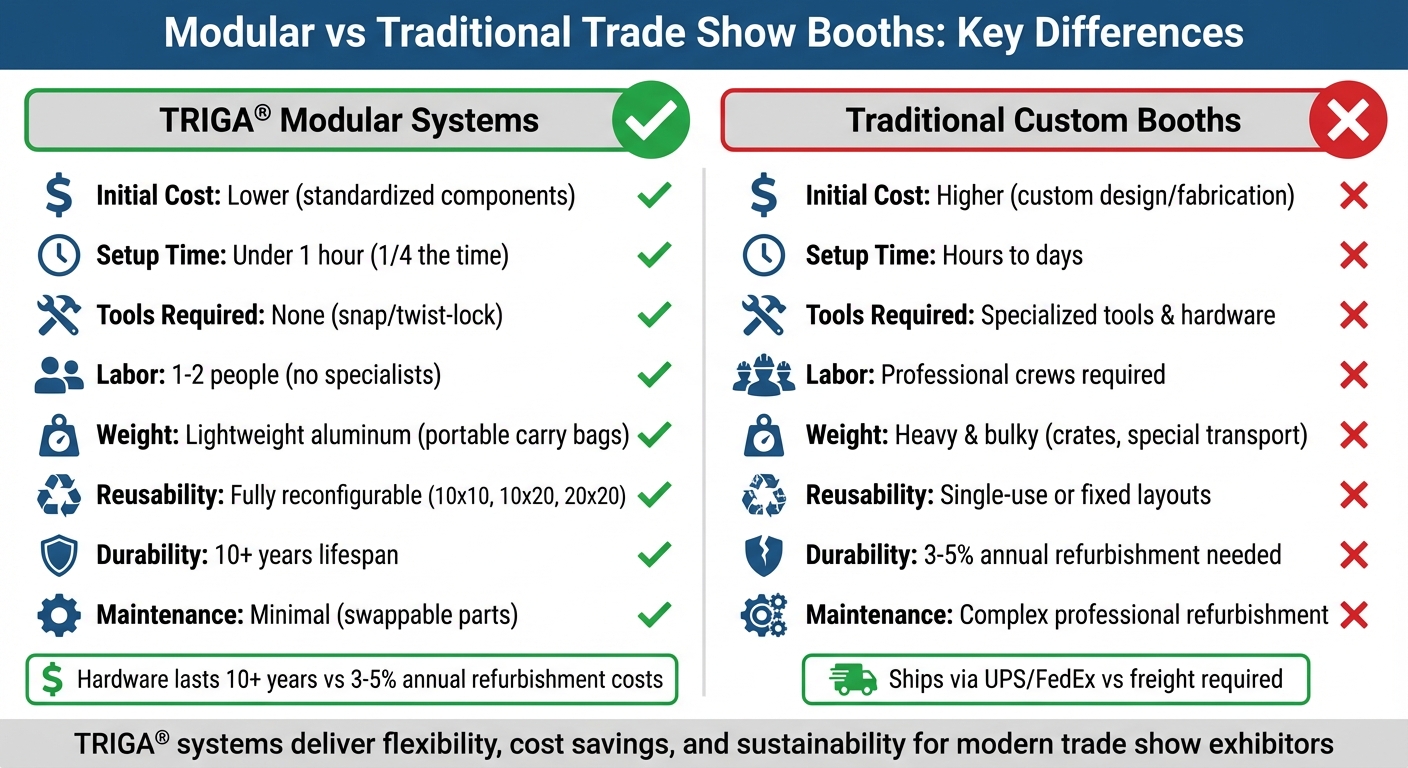
Modular vs Traditional Trade Show Booth Systems Comparison
The table below highlights the key differences between TRIGA® modular displays and traditional custom booths, focusing on critical performance factors.
| Metric | Modular Display Systems (TRIGA®) | Traditional Custom Booth Systems |
|---|---|---|
| Initial Cost | Lower upfront cost due to standardized, interchangeable components | Higher cost due to custom design and fabrication |
| Setup Time | Under 1 hour – roughly 1/4 the time needed for custom booths | Can take hours or even days, with extensive planning required |
| Tools Required | None – uses tool-free snap/twist-lock assembly | Requires specialized tools and hardware |
| Labor | 1–2 people can set up without needing specialists | Professional crews required for setup and dismantling |
| Weight/Portability | Lightweight aluminum; fits into portable carry bags | Heavy and bulky; usually requires crates and special transport |
| Reusability | Easily reconfigurable for different booth sizes (e.g., 10×10, 10×20) | Often designed for single use or fixed layouts |
| Durability | Hardware lasts over 10 years with minimal wear | Requires 3–5% annual refurbishment on average |
| Maintenance | Easy upkeep with swappable parts for cleaning or simple repairs | Maintenance often involves complex, professional refurbishment |
TRIGA® systems shine in their ease of setup. For example, a single person can assemble a 10×8-foot TRIGA® backwall in just minutes, whereas traditional booths demand professional crews and significantly more time. Their long-term cost efficiency is another standout feature, with hardware lasting over a decade, compared to the recurring repair costs of 3–5% annually for custom booths.
Portability is another major advantage. TRIGA® displays fit into compact cases, making them suitable for standard UPS or FedEx shipping, which helps cut down on freight and drayage expenses. Additionally, the ability to reconfigure the same hardware for different booth sizes and update graphics instead of replacing the entire structure further reduces costs.
This comparison clearly demonstrates why modular systems like TRIGA® are a smart choice for modern trade show exhibits.
Conclusion
TRIGA® systems deliver cost savings and improve booth performance through their adaptable, long-lasting, and environmentally conscious design.
By cutting the typical 3–5% annual refurbishment costs tied to custom booths and offering hardware built to last over a decade, TRIGA® provides a smart, long-term investment for businesses. Plus, its reconfigurable design means you can adjust a single system to fit various booth sizes, eliminating the need to purchase separate displays for each event.
The benefits don’t stop there. The system’s compact design significantly reduces shipping costs by allowing transport through standard carriers. Need a branding refresh? No problem – just order new fabric graphics and keep using the same sturdy frame.
Whether you’re setting up at a small conference or a massive trade show, TRIGA® uses its modular components to meet your changing exhibition needs with ease.
FAQs
What booth size should I plan for first?
When setting up your first trade show booth, a 10×10-foot space is a great starting point. This size is widely used and works well for most events. Modular systems, such as TRIGA® displays, offer a smart solution since they can be adjusted to fit different booth sizes. As your trade show presence grows, these systems make it simple to scale up to larger configurations like 10×20 or even 20×20. Opting for a setup with flexibility ensures you can easily adapt to different venues and changing needs.
How many people do I need to set it up?
Typically, assembling a modular display system requires between one and three people, depending on its size and complexity. Certain systems, such as TRIGA®, are specifically designed for quick and tool-free setup, allowing a single person to handle the entire process with ease and efficiency.
What should I store between shows?
Keep your display system’s modular components, graphics, and accessories stored safely between trade shows. This not only helps protect them from damage but also makes transportation simpler and ensures they’re ready to be reconfigured for future events. Proper storage plays a key role in extending the life of your display system and keeping it adaptable for different trade show setups.