

Choosing the right retail display depends on your goals, budget, and how long you need it. Portable displays are lightweight, cost-effective, and ideal for short-term promotions or events. Permanent displays, on the other hand, are durable, custom-built, and perfect for long-term use in high-traffic areas.
Key Differences:
- Portability: Portable displays are easy to move and set up, while permanent ones are fixed and require professional installation.
- Cost: Portable options cost $20–$500+, whereas permanent ones start at $200 and go up to $1,000+.
- Lifespan: Portable displays last weeks to months; permanent displays last years.
- Use Cases: Portable displays work well for seasonal campaigns or trade shows. Permanent displays are better for flagship stores or staple products.
Quick Comparison:
| Factor | Portable Displays | Permanent Displays |
|---|---|---|
| Cost | $20–$500+ | $200–$1,000+ |
| Lifespan | Weeks to 6 months | 2–5+ years |
| Mobility | High | Low |
| Best For | Short-term promotions | Long-term brand presence |
Both have their strengths. A hybrid approach – using portable displays for temporary needs and permanent ones for long-term goals – can offer the best results.
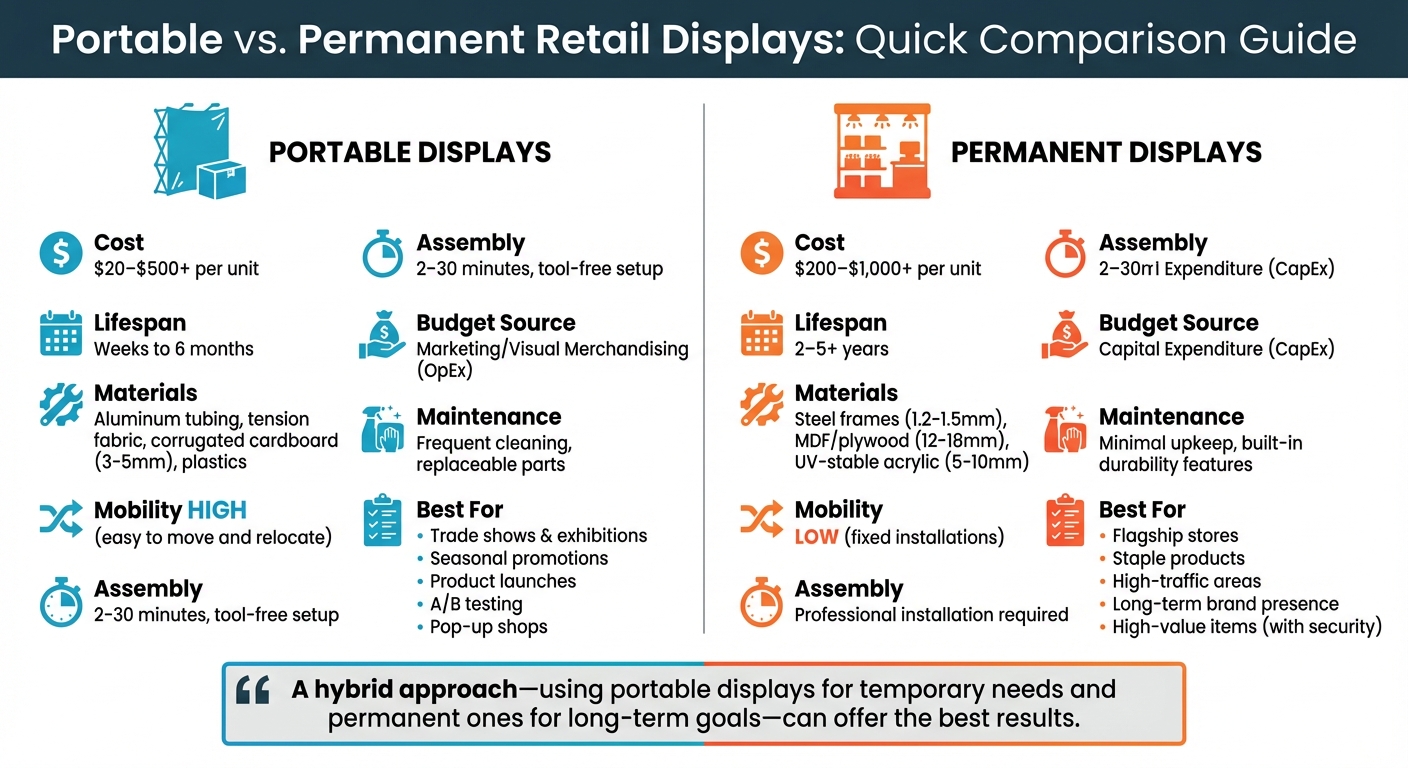
Portable vs Permanent Retail Displays Comparison Chart
Portable Retail Displays: Features and Benefits
Key Features of Portable Displays
Portable displays are designed for quick and easy assembly, thanks to their tool-less knock-down construction. Parts are built to snap or slide into place without requiring screws, bolts, or any specialized tools. This allows for setup and breakdown in as little as 2 to 30 minutes, making them a perfect fit for fast-moving retail environments.
These displays are crafted from materials that balance durability with lightweight functionality. Common materials include aluminum tubing, tension fabric, corrugated cardboard (3–5 mm thick), and resilient plastics. These materials are tough enough to handle frequent transport while still being easy to carry. Many designs are shipped flat-packed and can be stored the same way, helping to reduce both freight and storage costs between campaigns. When not in use, they fold into compact cases – some of which can even double as counters – minimizing the need for costly warehouse space.
Another standout feature is modular construction. These displays can adapt to various setups, whether for a 10×10 ft. trade show booth or an expanded 10×20 ft. space. Many surfaces also support high-resolution printing, which makes updating graphics quick and straightforward. Together, these features simplify logistics and improve operational efficiency.
Advantages of Portable Displays
The practical design of portable displays brings a host of benefits to retailers. One of the most important is agility. As Elder Ocampo from S-CUBE Fixtures points out:
The main advantage is agility. Their lightweight design enables rapid setup by store staff.
Cost savings are another big plus. Individual portable units are priced between $20 and $500, while temporary cardboard displays can range from just $15 to $150. This is often less than 25% of the price of permanent fixtures. Beyond the initial cost, these displays save on labor, shipping, and storage expenses. High-quality aluminum frames can even be reused for years simply by replacing the fabric graphics.
Portable displays also shine when it comes to A/B testing. They allow retailers to experiment with product placement and gather real-time sales data, helping to refine merchandising strategies before committing to permanent fixtures. On top of that, they’re excellent for transforming underutilized areas – like wide walkways, corners, or "dead zones" – into attention-grabbing spaces that encourage impulse purchases.
Use Cases for Portable Displays
The versatility and affordability of portable displays make them a go-to choice for a range of retail applications.
Trade shows, exhibitions, pop-up shops, and seasonal promotions are prime examples. Products like pop-up backwalls, retractable banner stands, and modular counters create polished, branded setups that can be easily packed into shipping cases. Whether you’re launching a holiday campaign, testing a new market, or building a "store-within-a-store" experience, these displays can be quickly adjusted to meet your needs. As noted by Richfields Plastics:
Portable store displays are lightweight and easy to assemble, making them perfect for businesses that regularly update product promotions or attend trade shows.
For outdoor events and product launches, portable displays are equally effective. A-frames and easel stands are ideal for sidewalk sales or farmers markets, especially when made from weather-resistant materials like sturdy metals or durable plastics. Folding grid racks and tabletop risers are also great for creating multi-level presentations on existing counters, maximizing visual appeal in tight spaces.
sbb-itb-bcf2cad
Permanent Retail Displays: Features and Benefits
Key Features of Permanent Displays
Permanent displays are designed to endure, typically lasting 1–5 years thanks to their heavy-duty materials. They are built with components like steel frames (1.2–1.5 mm thick), MDF or plywood panels (12–18 mm), and UV-stable acrylic (5–10 mm). These materials allow the displays to handle significant weight – often between 55 lbs and 132 lbs, depending on their size and design.
The construction relies on precise joinery, such as CNC-machined joints, dowels, and bolted connections, ensuring a sturdy structure. Powder-coated metal bases add durability by resisting rust and absorbing physical impacts. Additionally, floor levelers keep the displays stable on uneven surfaces and make cleaning around them easier. As Katie Kochelek from Frank Mayer highlights:
Materials like powder-coated metal, especially on a base, can help withstand bumps and provides rust resistance. Even simple elements like rounded corners weather abuse better than sharp edges.
Many of these displays are designed with flexibility in mind. Features like magnetic graphic frames or integrated digital screens allow brands to update their messaging or visuals over time, adding to the displays’ long-term functionality.
Advantages of Permanent Displays
The sturdy build of permanent displays offers more than just durability. Unlike temporary displays, which typically last 2 to 12 weeks, permanent fixtures are built to handle years of wear and tear. This longevity translates to lower maintenance costs and a better return on investment (ROI).
Another advantage is their ability to reinforce brand identity. Permanent displays can be customized with unique finishes, specialized lighting, and architectural elements, creating a strong visual connection to the brand. For high-value products, these displays often include built-in security features like lockable cases and cable anchors – something not practical with lighter, portable options.
Although the initial cost is higher – ranging from $200 to $1,000 per unit – the extended lifespan and durability make them a worthwhile investment. Yan Luo from Samtop Display explains it well:
Permanent = engineered for structure & longevity; Temporary = engineered for speed & cost efficiency.
Use Cases for Permanent Displays
Permanent displays are ideal for high-traffic areas where durability, consistency, and security are essential. They shine in flagship stores and retail environments where showcasing products over long periods is a priority. Common applications include branded shelving, interactive tech zones, and elaborate wall displays designed to hold multiple SKUs. These are especially effective for staple items that don’t require frequent rotation.
In-aisle displays for products like lighting, hardware, or electronics benefit from the stability and security of permanent fixtures. Lockable compartments ensure valuable items are protected while still accessible to customers.
Storefront window displays and branded kiosks also rely on permanent construction for a polished, professional look that lasts. Their robust materials and finishes hold up against sunlight, temperature changes, and constant customer use, maintaining their appearance over time. Unlike portable displays, which are great for short-term needs, permanent fixtures provide a reliable, continuous brand presence.
Portable vs. Permanent Displays: Side-by-Side Comparison
Cost and Budget Considerations
Portable displays are priced between $20 and $500+ per unit, making them a lower-cost option upfront. On the other hand, permanent displays require a higher initial investment, but they can deliver better returns over time. Katie Kochelek from Frank Mayer highlights this trade-off:
The initial investment up front is worth the ROI and brand continuity in the end.
How these displays are funded also differs. Portable displays are usually covered by Marketing or Visual Merchandising budgets, treated as operational expenses. Meanwhile, permanent displays often fall under Capital Expenditure (CapEx) or store construction budgets. Portable options may seem more affordable initially, but their frequent replacements lead to higher recurring costs. Permanent displays, while more expensive to install, offer long-term value with minimal maintenance expenses.
| Factor | Portable Displays | Permanent Displays |
|---|---|---|
| Upfront Cost | $20–$500+ per unit | Higher (custom design + materials) |
| Budget Source | Marketing / VM | CapEx / Store Construction |
| ROI Timeline | Immediate (per campaign) | Long-term (1–2 years) |
| Recurring Costs | High (frequent replacement) | Low (maintenance/updates) |
While cost is an important consideration, flexibility plays an equally crucial role in choosing the right display type.
Flexibility and Adaptability
Portable displays shine when it comes to mobility. They can be easily repositioned by store staff to test different product placements or adapt to seasonal needs – no special tools required. This makes them an excellent choice for A/B testing or temporary campaigns. A great example of this adaptability comes from April 2025, when a luxury fragrance brand used a hybrid approach in 50 department stores. They combined permanent gondola fixtures with modular acrylic risers featuring halo lighting. The result? A 340% increase in customer attention and three seamless seasonal campaign rollouts without structural changes.
Permanent displays, in contrast, are designed to anchor the store layout. They provide a consistent brand presence and are better suited for long-term use. While they aren’t meant for frequent relocation, many permanent setups include modular features like magnetic graphics or digital screens for quick updates. Bob, the Founder of Samtop Display, captures this balance perfectly:
Displays are the jewelry of the store – bold, beautiful, and ever-changing. Fixtures are the skeleton of the retail space – structural, stable, and scalable.
| Feature | Portable Displays | Permanent Displays |
|---|---|---|
| Mobility | High; easily moved by staff | Low; fixed installations |
| Assembly | Quick; often tool-free | Professional installation required |
| Branding Updates | Quick graphic swaps | Modular add-ons or digital integration |
| Best Use Case | Seasonal sales, product launches | Staple goods, flagship showcases |
After flexibility, durability and maintenance are key factors to weigh when selecting a display type.
Durability and Maintenance
Portable displays are typically made from lightweight materials like metals, acrylic, and plastics, giving them a lifespan of 2 weeks to 6 months. In contrast, permanent displays, constructed from steel, solid wood, and high-grade plastics, can last 2 to 5+ years.
Maintenance needs also vary. Portable displays require more frequent cleaning and allow for easy part replacements. Permanent displays, however, are built with durability in mind. Features like floor levelers prevent wobbling during cleaning, and powder-coated metal bases resist rust. Both types can accommodate updates – portable displays through quick graphic swaps, while permanent fixtures often use magnetic frames or digital screens for refreshing their look.
| Factor | Portable Displays | Permanent Displays |
|---|---|---|
| Materials | Lightweight metals, acrylic, plastics | Steel, solid wood, high-grade plastics |
| Lifespan | 2 weeks to 6 months | 2 to 5+ years |
| Maintenance Style | Replaceable parts; regular cleaning | Built-in durability features; minimal upkeep |
| Wear Resistance | Moderate | High; withstands heavy traffic |
How to Choose the Right Display for Your Business
Factors to Consider
Start by evaluating how long your campaign will run. Portable displays are great for short-term needs – anywhere from a few weeks to six months – making them ideal for seasonal promotions, product launches, or testing new markets. On the other hand, permanent displays are designed for longevity, often lasting several years, and work best for showcasing staple goods or flagship products.
Budget is another key factor. Portable displays range from $20 to over $500, which makes them a practical choice for one-time events. However, they may involve recurring expenses. Permanent displays require a higher initial investment because they often include custom engineering and premium materials like steel or finished wood. But over time, they can be more cost-efficient. To estimate the ROI of permanent displays, use this formula:
(Installation Length) x (Turn Count) x (Retail Value per Display) x (Contribution Margin).
For example, a permanent display costing $350, with a 15% margin and 8 turns over two years, justifies a budget of $840 per display.
Your choice of display also impacts how effectively you use retail space and engage customers, both of which are vital to a successful strategy.
Location and environment are equally important. High-traffic areas demand sturdy, durable materials like steel, wood, or high-grade plastics for permanent fixtures. Meanwhile, if your retail layout changes often or you attend trade shows, lightweight and modular portable displays are a better fit.
Finally, think about brand identity. Permanent displays communicate stability, prestige, and alignment with your store’s overall design. Portable displays, by contrast, are perfect for creating urgency and showcasing flexibility – ideal for promotional campaigns. As Elder Ocampo from S-CUBE Fixtures puts it:
A static merchandising strategy just doesn’t cut it anymore. To stay competitive, you need to adapt, test, and respond to your customers in real-time.
Once you’ve assessed these factors, it’s time to focus on strategies for maximizing your return on investment.
Tips for Maximizing ROI
Opt for modular features like removable magnetic graphics, updatable digital screens, and knock-down (KD) designs. These options reduce labor and freight costs while allowing you to refresh messaging without replacing the entire display. Flat-packed designs also make storage and transportation easier, cutting down on freight expenses.
To enhance durability, choose materials and features that withstand wear and tear. For instance, levelers protect against wet floors, powder-coated metal resists rust, and rounded corners help prevent damage from impacts. As Katie Kochelek from Frank Mayer highlights:
Permanent retail displays are an investment in long-term marketing and branding within a retail environment.
Finally, consider a hybrid approach to balance flexibility and consistency. Use permanent displays for your core, high-demand products, and complement them with portable freestanding units for seasonal promotions or rotating "hero" products. This method ensures brand alignment while giving you the freedom to test new product placements and adapt to changing trends.
Conclusion
Deciding between portable and permanent retail displays comes down to aligning the display type with your business objectives. Portable displays shine when flexibility, cost savings, and short-term testing are priorities. On the other hand, permanent displays are ideal for establishing a strong, enduring brand presence, highlighting core product lines, and withstanding the demands of high-traffic areas.
The most effective retailers don’t treat this as a one-or-the-other decision. As mentioned earlier, portable displays provide adaptability, while permanent fixtures offer stability. A balanced approach – using permanent displays for staple products and portable ones for seasonal or promotional items – gives you the best of both worlds. This strategy ensures a consistent brand image while allowing you to quickly adapt to shifting market trends and customer preferences.
Blending both display types lets you maximize their individual advantages. For campaigns lasting less than six months, portable options are often the more economical choice. For installations designed to last several years in busy locations, permanent displays tend to deliver a stronger return on investment, even with higher upfront costs. No matter which direction you go, the ultimate goal is to create an engaging and memorable customer experience.
TRIGA® Displays offers modular solutions that cater to both portable and permanent display needs. With tool-free, customizable systems, you can design displays that grow with your business – whether it’s a trade show booth or a long-term retail fixture. Features like LED lighting, media mounts, and hidden storage enhance both functionality and customer interaction, giving you the flexibility to meet your goals effectively.
Looking for the perfect display solution? Contact TRIGA® Displays USA to discover how our flexible, eco-friendly systems can help you create impactful retail experiences that drive results.
FAQs
How do I calculate ROI for a permanent display?
To figure out the ROI for a permanent display, use this formula: ROI = (Net Income / Total Cost) x 100.
Here’s how it works:
- Net income is the profit the display generates after deducting all related expenses.
- Total cost includes everything: purchase price, installation fees, and ongoing maintenance.
Simply divide the net income by the total cost, then multiply by 100 to get the ROI as a percentage. This gives you a clear picture of how profitable the display is over time.
When does a hybrid display strategy make sense?
A hybrid display strategy blends the strengths of portable and permanent displays to offer flexibility, engage customers, and manage costs effectively. This combination works especially well for seasonal campaigns or promotional events while ensuring ongoing brand presence. For instance, portable displays can handle short-term promotions, while permanent fixtures highlight core products. This balance allows retailers to adapt quickly to changing needs while maintaining a durable, consistent brand image.
What display type works best in high-traffic areas?
Portable displays work great in busy spaces because they’re easy to move and adjust. Their lightweight, modular design makes setup simple, which is especially helpful in areas where layouts or promotions change often. On the other hand, permanent displays offer durability but lack the flexibility of being repositioned, making them less suited for environments with shifting customer traffic or evolving promotional demands.