

Trade shows produce alarming amounts of waste, with materials like PVC, wood, and aluminum often discarded after just one use. This not only harms the planet but also drives up costs for exhibitors. The solution? Smarter, reusable display systems and eco-conscious materials.
Here’s how you can reduce waste and save money while maintaining a professional booth setup:
- Audit your booth setup: Identify single-use materials and inefficiencies in shipping or storage.
- Choose reusable materials: Opt for recycled aluminum frames, PET fabric graphics, and modular systems.
- Switch to modular displays: These systems are lightweight, tool-free, and can be reused for multiple configurations.
- Reduce printed materials: Use QR codes and digital catalogs instead of brochures.
- Plan for end-of-life: Ensure materials like aluminum and PET fabric can be recycled or repurposed.
Trade Show Waste: Sources and Impact
Common Sources of Waste at Trade Shows
Trade shows generate a surprising amount of waste, with single-use booth structures being one of the main culprits. Custom-built booths made from materials like lumber, plywood, and MDF are often discarded after just one event. To give you an idea, a typical 20×20 booth can require about 13 sheets of 4×8 plywood just to cover its walls. Add materials like rigid PVC panels, foam board signage, and vinyl banners, and the waste quickly escalates.
Flooring and printed materials are other significant contributors. Rented carpets, for instance, are usually thrown out after a single five-day event. Meanwhile, thousands of brochures, catalogs, and spec sheets often go directly from attendees’ hands into trash bins.
"The average trade show exhibit is built, shipped, installed, torn down, and discarded – or warehoused at significant cost – all within a five-day window." – Tariq Ahmed, Pure Exhibits Team
The environmental toll is clear, but these wasteful practices also have a financial cost.
The Financial Cost of Wasteful Practices
Wasteful booth designs and materials can drive up costs in ways that aren’t always obvious. For example, drayage fees – the cost of moving materials around the convention floor – skyrocket with heavy, non-modular booth setups. Bulky crates filled with rigid panels not only increase shipping and labor costs but also waste valuable freight space.
Inefficient packing is another hidden expense. Oversized crates that aren’t packed efficiently mean you’re paying for unused volume during shipping. For companies that attend multiple trade shows annually, these inefficiencies can add up fast. In contrast, using a modular aluminum frame that can be reused across several years significantly reduces costs compared to single-use booth builds.
Taking a closer look at your booth setup can reveal areas where you can save money and reduce waste.
How to Audit Your Current Booth Setup
If you want to make meaningful changes, start auditing your booth setup about 8 weeks before your next event. Focus on three areas: how much of your booth can be reused, the total shipping weight, and the costs associated with disposal and drayage. Addressing both material and logistical inefficiencies is key to creating a more sustainable and cost-effective display system.
Here’s a breakdown of what to review and what to aim for:
| Audit Category | What to Check | Sustainability Goal |
|---|---|---|
| Structure | Frame material and assembly method | Recycled aluminum; tool-free modular designs |
| Graphics | Substrate and ink type | Recycled PET fabric; water-based or low-VOC inks |
| Logistics | Total weight and crate volume | Lightweight components; efficient packing to minimize unused space |
| Operations | Lighting and handouts | LED lighting; digital catalogs or QR codes |
| End-of-Life | Disposal or reuse plan | Ensure 100% storage, donation, or recycling options |
Graphics are an area where you can make a big difference. Using evergreen graphics – designs that aren’t tied to a specific event – can significantly increase reusability. On the other hand, event-specific graphics often go to waste after just one use. Also, check whether your booth requires adhesives, screws, or special tools for assembly. These features often indicate a design that generates unnecessary waste and increases labor costs during setup.
sbb-itb-bcf2cad
Choosing Eco-Friendly Materials and Graphics
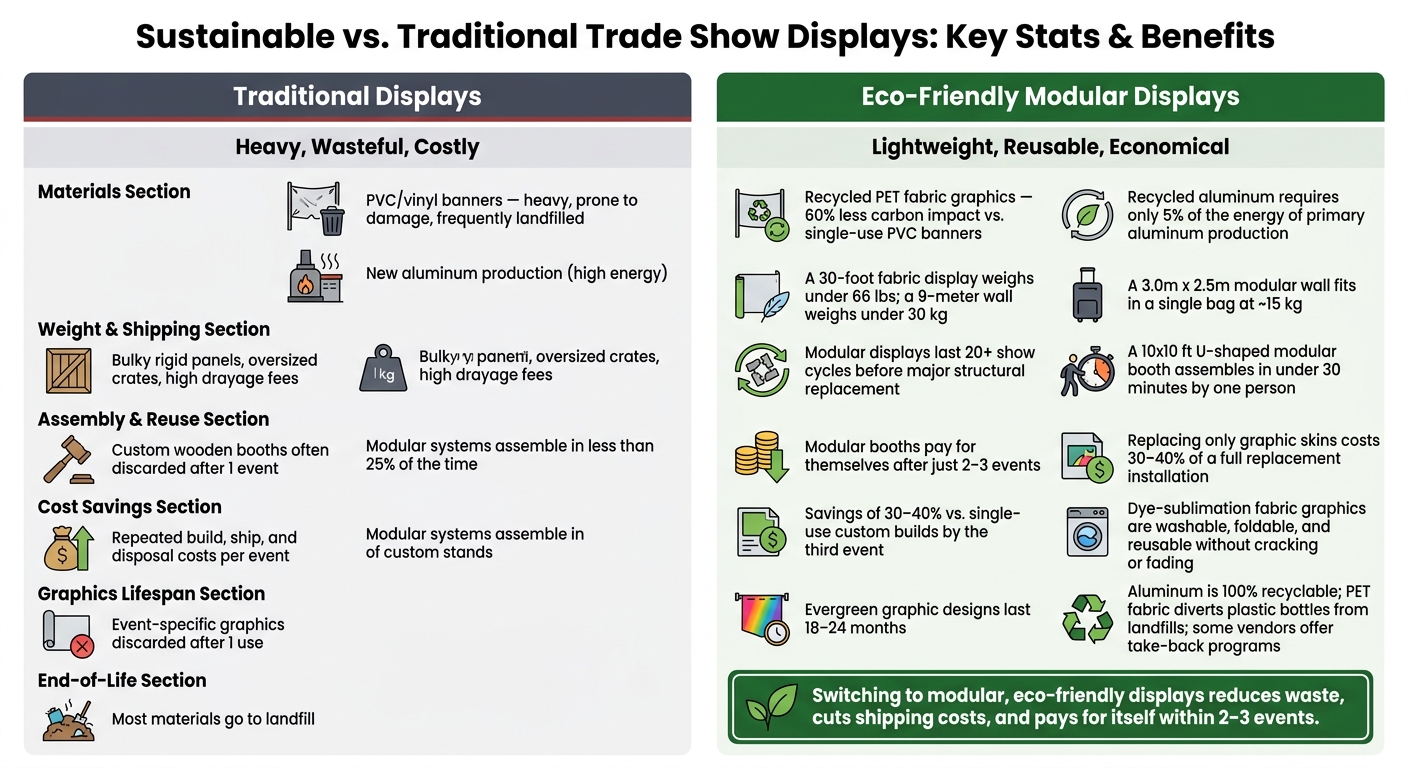
Sustainable vs. Traditional Trade Show Displays: Key Stats & Benefits
Eco-Friendly Materials for Modular Displays
Once you’ve evaluated your booth, opt for materials that align with sustainability goals. Recycled aluminum frames and fabric graphics are excellent choices for modular displays. Recycled aluminum forms the core of many modular systems, designed to be easily disassembled and reused across multiple shows. Plus, producing recycled aluminum requires just 5% of the energy needed for creating new aluminum.
For surfaces, consider alternatives like bamboo or sorghum board to minimize deforestation. If you’re updating your booth flooring, reusable interlocking luxury vinyl tiles (LVT) or laminate panels are smart replacements for single-use rented carpets, which are often discarded after a single event.
"Careful engineering of every component has resulted in a unique product, manufactured from materials that are all easily recyclable." – TRIGA® Displays
The key is to prioritize materials that can withstand multiple uses.
Why Textile Graphics Are a Better Choice
Switching to textile graphics can make a big difference in reducing your booth’s environmental impact. Traditional PVC and vinyl banners are heavy, prone to damage, and frequently end up in landfills. On the other hand, dye-sublimation printing embeds ink directly into fabric fibers, making the graphics washable, foldable, and reusable without cracking or fading. A 30-foot fabric display, for example, weighs less than 66 pounds, which helps lower shipping emissions. Compared to single-use PVC banners, fabric graphics have about 60% less carbon impact.
For a sleek, professional look, Silicone Edge Graphics (SEG) systems are a great option. These systems stretch fabric tightly over an aluminum frame, eliminating wrinkles and offering a polished appearance without the need for rigid panels. Additionally, using water-based, low-VOC inks during the printing process reduces harmful emissions and creates a safer environment for production teams.
Another advantage of fabric graphics is their convenience. Unlike vinyl, which needs to be rolled or crated, fabric can be folded into compact packages, saving both storage space and shipping volume.
How to Plan for Graphic Reuse
To get the most out of your eco-friendly displays, design graphics with long-term use in mind. Focus on creating evergreen designs that can last 18–24 months by emphasizing core branding instead of event-specific details. For updates, incorporate digital elements like QR codes to reduce the need for reprints.
One effective strategy is to use large backwall graphics for consistent brand messaging while reserving smaller, modular panels for campaign-specific content that changes more often. This way, you only need to reprint the parts that require updates, not the entire display. Replacing just the graphic "skin" on a tension frame system typically costs 30% to 40% of a complete replacement installation.
Using Modular Display Systems to Cut Waste
What Are Modular Display Systems?
Modular display systems are made up of interchangeable parts – like frames, rails, connectors, and fabric graphics – that can be assembled, disassembled, and reconfigured to fit a variety of booth sizes and layouts. Unlike traditional wooden booths, which are often tossed out after a single use, modular systems are designed to last through dozens of events.
The standout feature here is flexibility. These systems use tool-free "snap and slot" assembly, allowing you to create multiple booth configurations without needing new materials or specialized skills.
From an environmental perspective, modular systems cut down on waste by reducing reliance on single-use materials. For example, aluminum modular frames are 99% recyclable, helping to break the wasteful cycle of building and discarding booths. This makes them a smart choice for companies looking to adopt more sustainable practices.
TRIGA® Displays Modular Product Examples
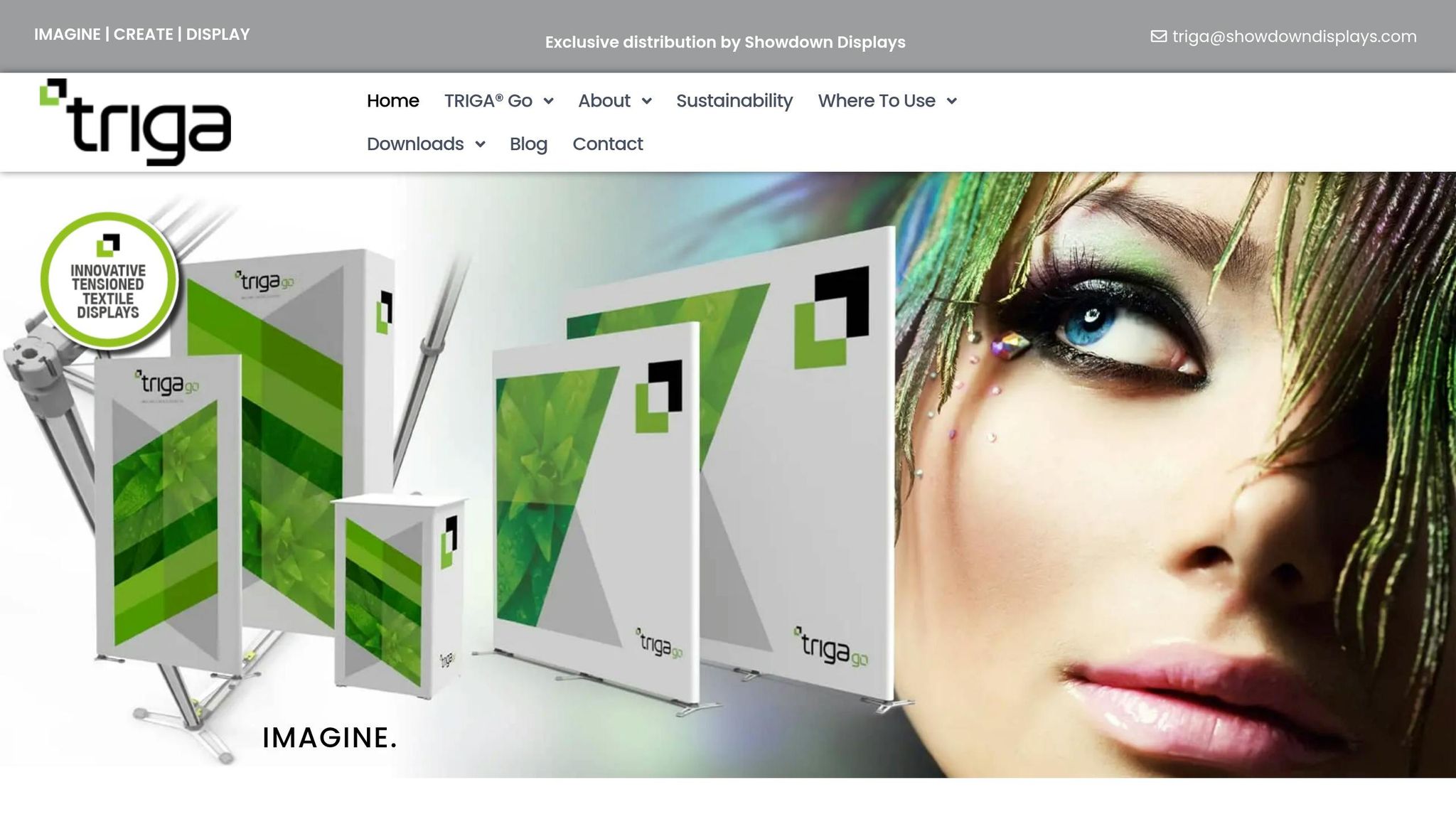
TRIGA® Displays offers a variety of modular systems built with reusability in mind. The TRIGA® Go line is perfect for small to medium-sized events and roadshows, with a maximum height of 2.5 meters. Its design simplifies transportation, breaking down into just three main components that fit into padded shoulder bags – ideal for teams on the move.
"TRIGA® Go is an affordable, ultra lightweight solution with an integrated graphic rail and tensioner that reduces the system componentry to only three main parts." – TRIGA® Displays
Here’s a closer look at some options within the TRIGA® Go range:
- TRIGA® Go Straight Walls: These walls can be extended indefinitely or reshaped into configurations like boxes, L-shapes, or U-shapes by adding components.
- TRIGA® Go U Booth: This setup packs into carry bags, allowing brands to avoid generic shell scheme structures provided by event organizers.
- TRIGA® Go Counters: These flat-pack counters can be assembled without tools and feature interchangeable textile skins, making them a great fit for roadshows.
For larger events with heavier traffic, the TRIGA® Max system is a step up. It can reach heights of up to 5 meters and supports heavier accessories like TV screens and shelving while still maintaining the same tool-free assembly process.
| Feature | TRIGA® Go | TRIGA® Max |
|---|---|---|
| Max Height | 2.5 meters | 5 meters |
| Best For | Small/medium events, roadshows | Large exhibitions, complex setups |
| Weight Bearing | Basic shelving, lighting | TV screens, heavy shelving, bars |
| Transport | Padded shoulder bags | Wheelie bags |
These examples show how modular systems can adapt to a variety of event needs while simplifying logistics.
How to Switch to a Modular Display System
Switching to a modular system is straightforward. Start by reviewing your current setup. Identify the elements that generate the most waste and the booth layouts you use most often – like a 10×10 ft. inline booth or a corner configuration.
Next, think about how your current booth can translate into modular components. For instance, fixed walls can be replaced with modular backwalls, and heavy furniture can be swapped for flat-pack branded counters and towers. Once you’ve chosen your core components, plan two or three standard configurations – such as straight, L-shaped, and U-shaped setups – all using the same hardware.
Before your first event, do a trial assembly. A 10×10 ft. U-shaped modular booth can be set up in under 30 minutes by one person. This ensures your team is ready and that all components are accounted for. Over time, modular systems save money, typically paying for themselves after just two or three events by eliminating repeated build and disposal costs.
Logistics and Maintenance for Long-Lasting Displays
How to Pack and Ship Displays Efficiently
Transporting a booth can have a bigger environmental impact than its actual production. As Ommy Exhibits points out:
"The environmental cost of moving a booth from point A to point B is often higher than the cost of producing the booth itself."
To lessen this impact, consider switching to lightweight, modular systems. For instance, fabric graphics are a better choice than rigid vinyl, as they take up less space and weigh less, reducing shipping costs. Vinyl, on the other hand, requires bulkier packaging, which adds unnecessary weight and freight expenses. Another helpful strategy is sourcing materials locally, which avoids the need for long-distance transportation. Pairing this with reusable padded bags instead of single-use wooden crates can cut down on waste and logistics costs. These adjustments align well with the sustainable design principles mentioned earlier.
Maintenance Tips to Extend Display Lifespan
Taking care of your modular components can significantly extend their lifespan. In fact, a well-maintained modular display can last through 20 or more show cycles before needing any major structural replacements. Achieving this longevity involves adopting simple, consistent maintenance habits.
Before and after each event, clean frames and counters thoroughly to remove grime and maintain a polished appearance. During teardown, inspect all components for wear and tear – like bent connectors or frayed graphic edges – so minor issues can be fixed right away, avoiding the need for costly replacements later.
For fabric graphics, always fold them with the print side facing inward. This prevents scratches and dirt from damaging the printed surface during storage or transit. TRIGA® Displays emphasizes the importance of this practice:
"Fold fabrics print-side in, store them dry, and they’ll last far longer."
Make sure fabrics are completely dry before folding to avoid mold or material degradation. Similarly, neatly coil cables and store them in separate bags to prevent tangling or internal damage. These small but effective habits ensure your display system stays in top condition for future events.
How to Store Display Components Properly
Proper storage is crucial for keeping your display components in excellent shape. Store them in a clean, dry, and temperature-controlled space. While aluminum frames are highly durable, fabric graphics are more vulnerable to damage from moisture or heat, which can cause fading or material breakdown.
Organization also plays a big role. Label each fabric graphic by module and side (e.g., "Wall A Front") and include a reference photo of the assembled booth in the storage bag. This simple step saves time during setup and ensures everything is reassembled correctly.
For example, a modular wall measuring 3.0 m × 2.5 m (approximately 9.8 ft × 8.2 ft) can fit into a single bag weighing just 15 kilograms (about 33 lbs). Clear labeling makes handling and reassembly much easier.
To avoid damage, never drag aluminum components across rough surfaces. Instead, use padded carry bags or wheelie cases to prevent scratches and dents. As Tariq Ahmed from Pure Exhibits Team notes:
"A booth built to last ten shows costs less per show than one built for one."
Designing Displays for Reuse, Modularity, and Recycling
Core Principles of Reusable Display Design
Designing a display with reuse in mind means focusing on longevity and adaptability. A key strategy is to keep the structural components neutral while making graphic elements interchangeable. For instance, using a durable aluminum frame paired with fabric "skins" allows you to refresh your booth’s messaging for each new campaign without discarding the entire setup.
As TRIGA® Display Systems explains:
"Sustainability isn’t just about recycling or using greener materials. It’s about making smarter choices throughout the entire lifecycle of a product – from design to disposal."
To enhance reusability and recyclability, avoid adhesives, glued laminates, and screws during the design phase. Instead, opt for tool-free, snap-together systems that allow for easy assembly and disassembly. This approach not only simplifies reuse but also ensures clean separation of materials for recycling. Additionally, replacing printed brochures with QR codes and digital touchpoints embedded in your display eliminates paper waste while keeping your booth interactive. These principles lay a solid foundation for incorporating modular design.
How to Plan for Modular Design
Sustainable displays benefit greatly from modularity, which allows components to be reused across different configurations. By standardizing dimensions and materials, you can create a system where components serve multiple purposes – transforming from a straight wall to an L-shaped or island booth without requiring new parts. Think of it like assembling a puzzle with pieces that fit together in various ways, tailored to the event space.
For maximum efficiency, aim for a modular system with a functional lifespan of at least three years. This ensures your display remains cost-effective and visually cohesive, requiring only graphic updates between campaigns. Before investing, confirm the system’s scalability – for example, whether it can expand from a 10×10 backwall to a 10×20 booth using the same hardware. Over time, this flexibility can result in savings of 30–40% compared to single-use custom builds by the third event.
Recycling and End-of-Life Planning for Display Components
Even the sturdiest modular displays eventually reach the end of their lifecycle. Designing for this stage from the outset ensures sustainability remains a priority.
Aluminum frames are a standout material for end-of-life planning. Aluminum is fully recyclable and retains its quality through multiple recycling cycles. Plus, recycling aluminum requires only about 5% of the energy needed for its initial production. For fabric graphics, choose substrates made from recycled PET, which are produced by repurposing post-consumer plastic bottles. This not only reduces landfill waste but also delivers high-quality prints. When these graphics are no longer usable, some vendors offer take-back programs to repurpose them into items like tote bags or cushion fillers.
Here’s a quick comparison of common display materials and their sustainability benefits:
| Material | Recyclability | Key Sustainability Benefit |
|---|---|---|
| Aluminum | 100% recyclable | Requires only 5% of the energy of primary production |
| Steel | 100% recyclable | Magnetic properties make sorting and recovery easier |
| ABS Thermoplastic | 100% recyclable | Non-toxic and can be reprocessed into new products |
| PET Fabric | Often recyclable | Diverts plastic bottles from landfills; lightweight for shipping |
To ensure a sustainable lifecycle, ask vendors detailed questions before purchasing. Find out if frames are made from recycled aluminum, whether fabric substrates come from post-consumer waste, and if take-back or refurbishment programs are available. These considerations can make a big difference in reducing environmental impact.
Conclusion: Steps to Make Your Trade Show Displays More Eco-Friendly
Key Takeaways
Making trade show displays more sustainable starts with choosing durable, modular hardware and reusable textile graphics. For example, a 9-meter TRIGA® display wall weighs under 30 kilograms, making it lightweight and easy to transport. Modular systems also save time – assembling in less than 25% of the time it takes to build custom stands. Plus, aluminum components are fully recyclable, and modular booths can pay for themselves after just two or three events due to savings on labor, transport, and storage. After that, your only ongoing expense is updating fabric graphics. These practical insights make it clear how you can reduce your display’s environmental footprint without sacrificing quality or impact.
Take Action with TRIGA® Displays
Here’s how you can start making your trade show displays more eco-friendly:
- Audit your current setup: Look for materials that create the most waste and switch to reusable options.
- Ditch single-use structures: Replace disposable backwalls with modular systems to cut down on waste and costs.
- Go digital: Use QR codes instead of printed handouts to reduce paper waste.
- Streamline logistics: Standardize packing methods to lower shipping volumes and freight expenses.
"Using our award winning, modular display systems, we’re able to create eye-catching display and exhibition stands that are not only easy to build, but adaptable to new events." – TRIGA® Display Systems
TRIGA® Displays provides modular solutions tailored to your needs. Their TRIGA® Go series offers portable options like straight walls, totems, L-booths, U-booths, towers, and counters. For larger setups, the TRIGA® Max line delivers heavy-duty configurations. Whether you’re planning a small pop-up or a major trade show, TRIGA® has a setup that aligns with your space, branding, and sustainability goals.
FAQs
How do I choose the right modular display size for my booth?
Choosing the right modular display size comes down to your event space and specific activation needs. The beauty of TRIGA systems lies in their modular design, allowing you to reconfigure components to fit spaces like 10×10 or 10×20 feet seamlessly.
For smaller setups – up to 8 feet in height – the lightweight TRIGA Go system is a great option. If you’re working with larger booths that can go up to 16 feet high, the TRIGA Max system provides the strength and adaptability needed for more complex layouts.
What’s the easiest way to cut shipping weight and drayage fees?
Using lightweight, modular display systems is a simple way to cut down on shipping weight and drayage fees. TRIGA® systems are a great example, as they use aluminum frames and fabric graphics, which are much lighter compared to traditional materials. Entire booths can be packed into small, portable cases, reducing both freight volume and weight. This not only lowers transportation fuel usage and on-site handling costs but also helps minimize drayage fees. Plus, the reusable hardware means fewer heavy shipments are needed over time.
How can I recycle or repurpose my graphics after an event?
To cut down on waste, consider reusing your TRIGA® dye-sublimated fabric graphics. These graphics are washable and built for repeated use, making them a practical choice. Plus, their lightweight design allows you to swap them out without needing to replace the aluminum frame, reducing unnecessary waste. When the graphics eventually wear out, check if the textile material can be recycled – this provides an eco-friendlier option compared to standard PVC vinyl banners.